April 20, 2013

Clicker training for puppies – part one

admin

Many people ask if clicker training will work with puppies. Two days ago while driving down the road we rescued these two little guys that had been dumped on the side of the street.

Here they are learning to “sit” after just a few sessions of clicker training.

April 18, 2013

Rincon Foster Pup Flaco Learns Clicker Training is Fun!

Terrie Hayward

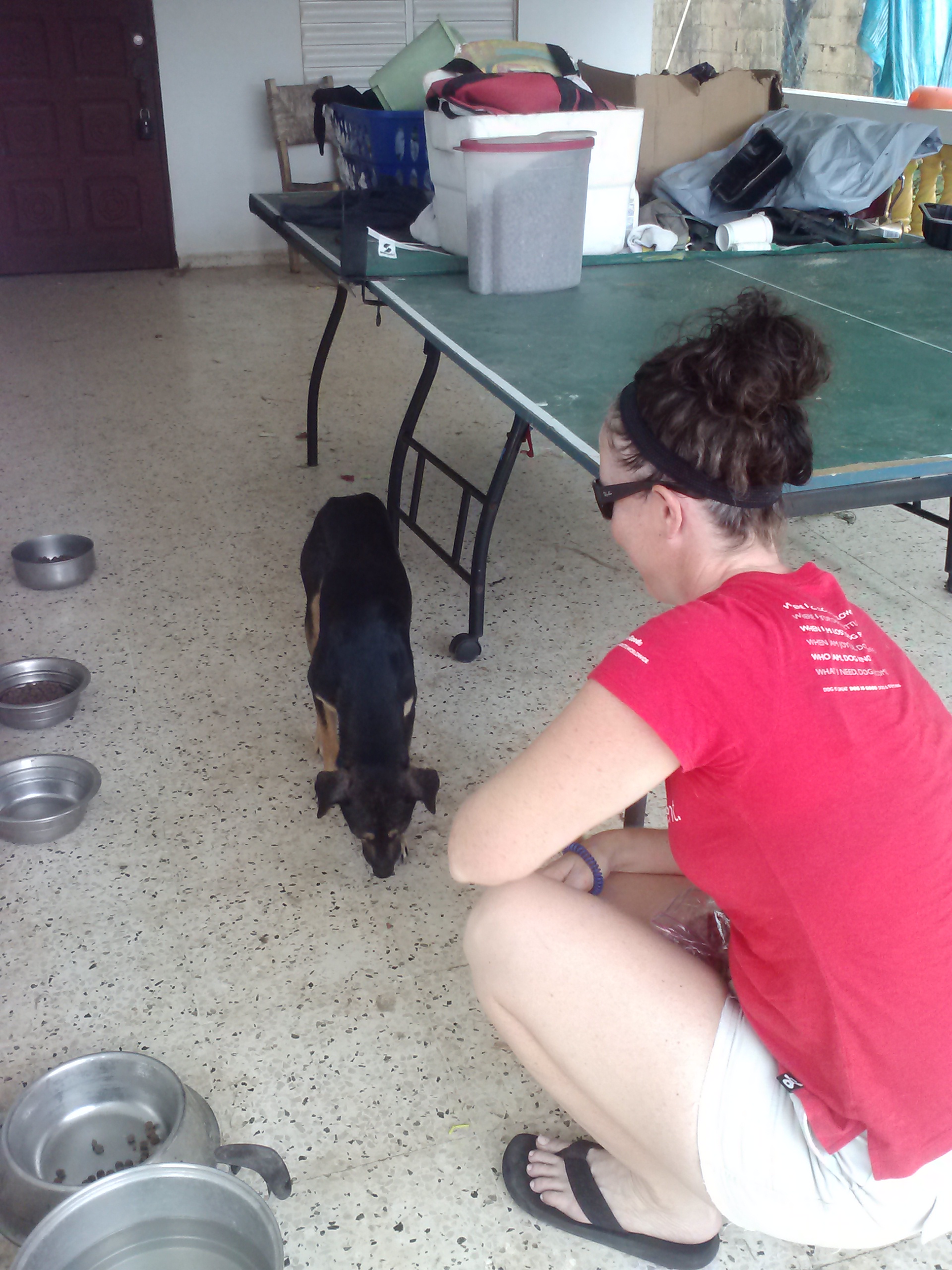
Rincon ARF Clicker TrainingFlaco is a sweet, male pup (neutered this week and up to date on vaccines) who is in the ARF system and seeking his forever family. He was rescued from the streets and is a shy fellow and nervous.

Terrie of PAW (Positive Animal Wellness) is working with him on developing confidence and sociability. Via clicker training first steps are introducing Flaco to the sound that the clicker makes and helping him to make the association that “click” = “good things” (this case in the form of tiny bits of hot dog).

Slowly Flaco emerged and came closer.

The next phase involved giving Flaco the choice to touch his nose to Terrie’s hand to sniff the treat that was inside. Upon doing this he earned a “click” and a “treat” (the piece of hot dog).

As Flaco grew more comfortable he also earned clicks and treats for allowing Terrie to touch and pet him. Eventually he rolled onto his side and even let her rub his belly. This is all good progress for a first time session!

If you are interested in adopting Flaco, please contact ARF at www.arf.org.

April 4, 2013

Why Clicker Training with Chickens Helps with Dogs!

Terrie Hayward

chixpix

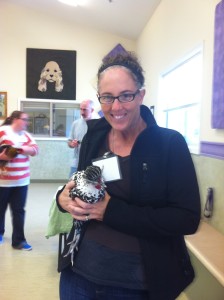
I was recently in Sequim, WA at the Legacy Canine Training Center with Terry Ryan where I completed the Chicken Camp: Targeting and Discrimination.

Which, then brings the question: “Why the heck are you working with chickens?” Thus, here are seven simple statements as to how awesome chicken camp is for folks who work with dogs (& people & other animals)! Chicken Camp helps with…

1) fine tuning skills-reinforce early rather than late (esp. important wit new/difficult behaviors)

2) illuminating the idea of not “luring” or “baiting” but rather reinforcing & rewarding successful approximations

3) recognition re: skill level too high or reinforcement level too low4) reminding re: length & timing of sessions in order to maximize & plan work appropriately5) being mindful of physiological issues which may affect performance

6) keeping in mind extraneous/multiple variables when reinforcing & planning training

7) managing time re: content & breaks in order to provide a relaxed & productive training environment

Suffice to say, my Chicken Camp experience has made me a better dog trainer!

(condensed version via Mary Lynch Barbera, PHD, RN, BCBA)


Ready for better dog or puppy behavior?

Fetch the latest training intel–straight to your inbox!