Remote dog training is going to be the new normal for the foreseeable future as the dog training profession has been upended due to Covid-19. When it comes to online training and behavior consults I have been working virtually for many years. Often times my clients are surprised to learn that I’m talking to them from the island of Puerto Rico in the Caribbean!
I started working remotely with clients when I began consulting on separation anxiety in dogs. Online work lends itself well to separation anxiety cases since my presence could change the dynamics of the situation.
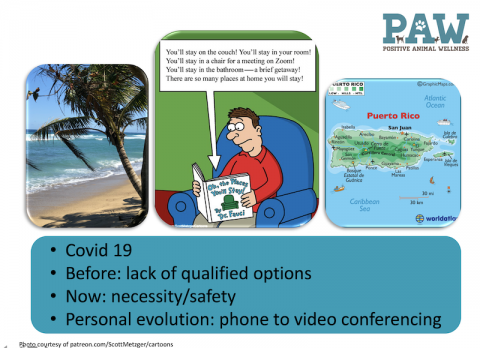
I also often work with special needs dogs and found that there were many clients seeking help who I could reach out and connect with virtually, too. My remote model organically expanded from there to where I now work with clients on-line about ninety percent of the time.
Another reason I initially transitioned to online work was because I was looking for an alternative means to income generation that wasn’t specifically tied to my geographical area. Additionally, I recognized that sometimes finding a qualified positive reinforcement trainer close to clients was a barrier to effective training. I’m lucky that via virtual behavior consults I’ve been able to help people around the world!
Initially, I began working at a distance with phone consults and then moved to a variety of platforms for video conferencing. Ultimately I ended up primarily using Zoom.
My online dog training consult evolution has led me to also launch a business with my husband called Pet Trainer HQ. We developed a platform that brings clients and professional, qualified, positive reinforcement trainers together. The virtual consult model was something that had been successful across other fields for a long time. With Pet Trainer HQ the idea was to facilitate smooth, easy connections with appropriate, positive reinforcement-based trainers and consultants and people who needed help.
Remote Dog Training Consults – Getting Started
People might feel a little bit nervous at first when thinking about offering virtual behavior consults. Questions arise like; “What exactly are the requirements?” “How would I go about doing this?” “What type of technology do I need?” and “How do know what behavior modifications are needed if I’m not there with the dog?”
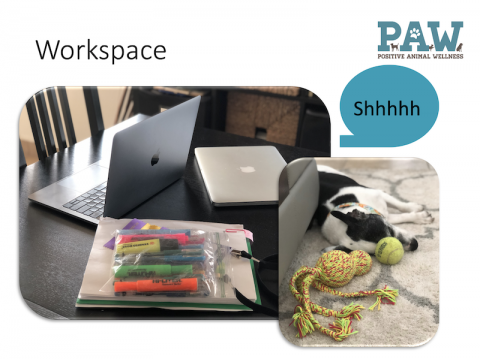
When considering working with your dog training clients virtually the tools that you need are not complicated. The first key is a reliable internet connection and preferably a backup internet service as well. I actually have triple redundancy with two paid services and a phone-tethering option.
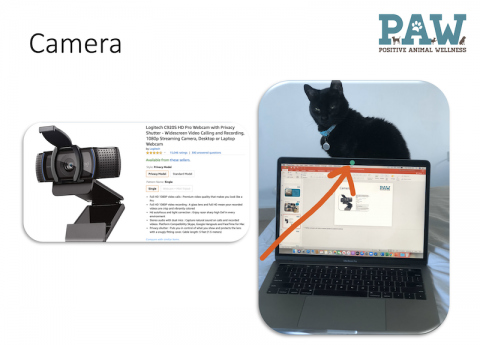
You want to also consider the camera that you’re using. Most laptops, tablets, and/or smartphones have a built-in camera. However, recently I came across two clients who had older computers that didn’t have cameras. A workaround for this scenario is to suggest folks purchase a separate camera. Most external cameras have a USB port that you can plug right into a laptop without a lot of complications. This is generally an easy and seamless solution.
Keep in mind that you want to have anything you want to use when you’re interacting with your client handy. If you’ve got a live demo-dog or a stuffed animal make sure they are close. Be sure you have your treat pouch, clicker, and anything else you might need for a demo nearby. Things like a food puzzle, muzzle, or harness might be helpful for your session and should be within arm’s reach.
Remote Dog Training Consults – Booking and Payment
The next step is making sure that you can schedule appointments and get paid for your time. As mentioned previously, I frequently use the Zoom platform. Within the Zoom interface you are able to create a meeting link, which you can send to clients. The link also automatically populates in your calendar. The advantage of having appointments auto-populate, either via Zoom or with a scheduler like Acuity is you are less likely to double book or forget an appointment altogether.
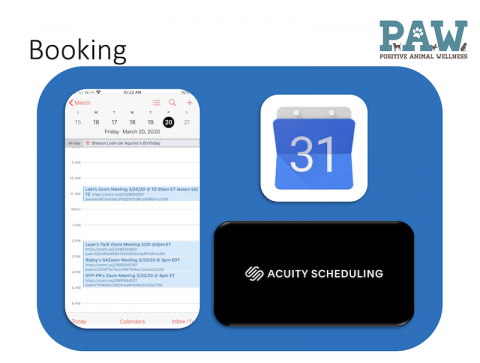
Pet Trainer HQ uses Acuity scheduling, which handles booking and payments, and sending appointment notifications with a Zoom meeting link.
There are also several online payment options. Most people are familiar with PayPal, which is an online platform that will link with your bank account. For U.S based trainers, Venmo is a payment app that doesn’t have a fee. Some other payment choices include Stripe, Amazon Payments, Dwolla, and Braintree.
Online Dog Training Consults – Logistics (Background, Lighting, Sound)
Once you’ve sorted your camera, scheduling, and payment, the next important logistics are background, lighting, and sound.
You want to have a clean background and a quiet spot where you can work. Moreover, you want to take into consideration any other potential extraneous noises. Sounds like an accidental video playing in the background, outside traffic, or client dog’s barking that could get your own dogs barking would be things to think about and proactively sort ahead of time.
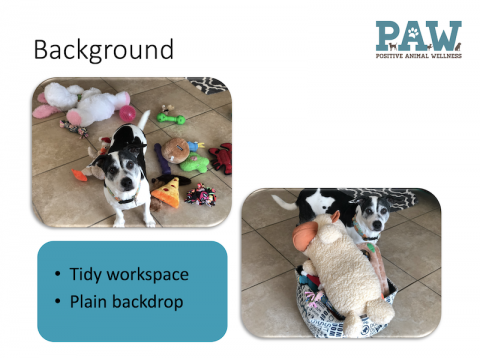
A professional online image is as important as your image in real life, so you want to confirm that whatever is in your client’s line of view looks tidy. Having a neat and quiet space for your work is important because it helps your clients to stay focused on what you’re discussing.
The background refers to what your client will see behind you during the video conference. You want to make sure that you have a tidy workspace. Before going online, take a glance around your meeting area and pick up random dog toys. Check that there isn’t a lot of clutter or that there aren’t distracting items in the camera view. You also want to take note of the location of mirrors and other reflective surfaces like picture frames which could inadvertently add unintended images into the scene.
Another critical component of doing remote dog training consults is lighting. A good way to test your lighting set up is with your cell phone. Move around and take a photo or shoot a video while you check out different spots to get the best light. You want to think about various times of day as they will give you different lighting and shadows.
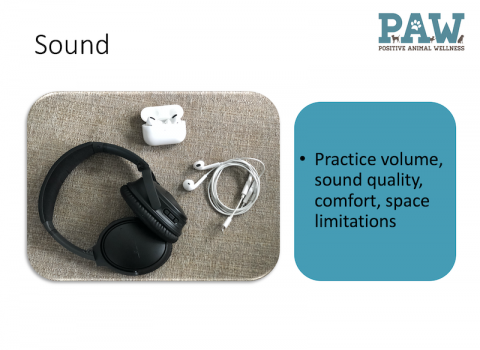
An additional consideration for a successful remote training consult is sound. Be sure that your sound quality is good. Determine if you need a separate microphone. Most laptop computers have a built-in mic. and in most cases, it is sufficient. Also think about situations where you might need to do a demonstration away from the screen. Be sure that you speak loud enough and enunciate clearly and that your microphone is strong enough to capture your voice.
Virtual Dog Training Consults – Record Keeping
I have two laptops–and it’s like command central! With two computers I have a comfortable set up for viewing and for note taking. It’s really helpful to think about how you’ll compile notes so that you can email them to your client afterward. This enables your client to be able to focus on the lesson vs. trying to jot down reminders.
Additionally, with online behavior consults, you have the benefit of being able to record and send the session to your client. This way they can review your meeting and go back to any parts that they might have found confusing or might like to review. At first you might cringe when recording training sessions, but video is a good tool which clients often find very helpful.
Remote Dog Training Consults – Handy Tips
When moving to working virtually it is important to ensure that you sell the benefits to clients. The model that most people are accustomed to is that either you go to their home or a specific spot, or they come to you. Sometimes people pose the question, “How will you understand the behavior problems that I’m having if you’re not here to see them?”
Since you don’t want to encourage a dog to practice unwanted behaviors, ask clients to take a short video on their phone, and send a little snippet so it’s possible to observe the situation.
Another advantage is that working virtually can eliminate flooding. If you go into the home of a fearful dog this might exacerbate their anxiety. Some dogs feel more relaxed working in their own house without a stranger present. With fearful dogs, clients can also use headphones to further minimize disruptions.
There’s also the convenience of scheduling. There’s no commute time, which is a bonus on the trainer side too. This means that sometimes you might be able to do appointments at times that are closer together than others, or later or earlier than you might otherwise be able to offer in person.
Remote Dog Training Consults – Effective Communication
Working virtually provides the perfect opportunity to finesse communication skills and to use and become more fluent with techniques like TAG points.
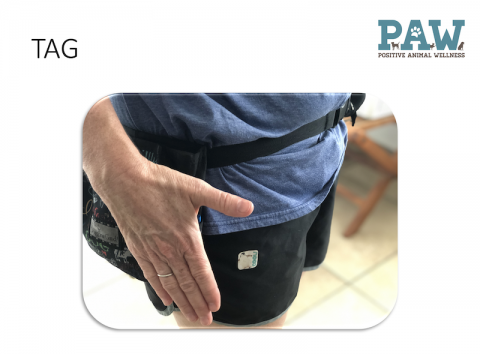
For example, when working on behavior issues in person it might be tempting to just grab the leash and show the client the skill yourself. However, when consulting online, instead you’ll need to do a demonstration with your dog or with a stuffed dog and then walk the clients through the mechanics of the behavior. This process also helps us remember to break down skills into small approximations which facilitates skill mastery.
If working virtually is new for you, you want to make things as easy on your end as possible too. Preparing some TAG points in advance can help the lesson flow more smoothly. Too, I often send clients an email ahead of a lesson and let them know of any props, special treats, etc. that they need for our meeting.
A final advantage of working online is the ability to share your screen. This affords you the option of creating some PowerPoint slides or to preparing a video and then share your desktop to show concepts to clients.
Virtual animal training and behavior consulting have many advantages, the least of which isn’t that we can still successfully help modify and teach behaviors online with clients!