
November 23, 2013

Humane Education in Rincon!
Terrie Hayward

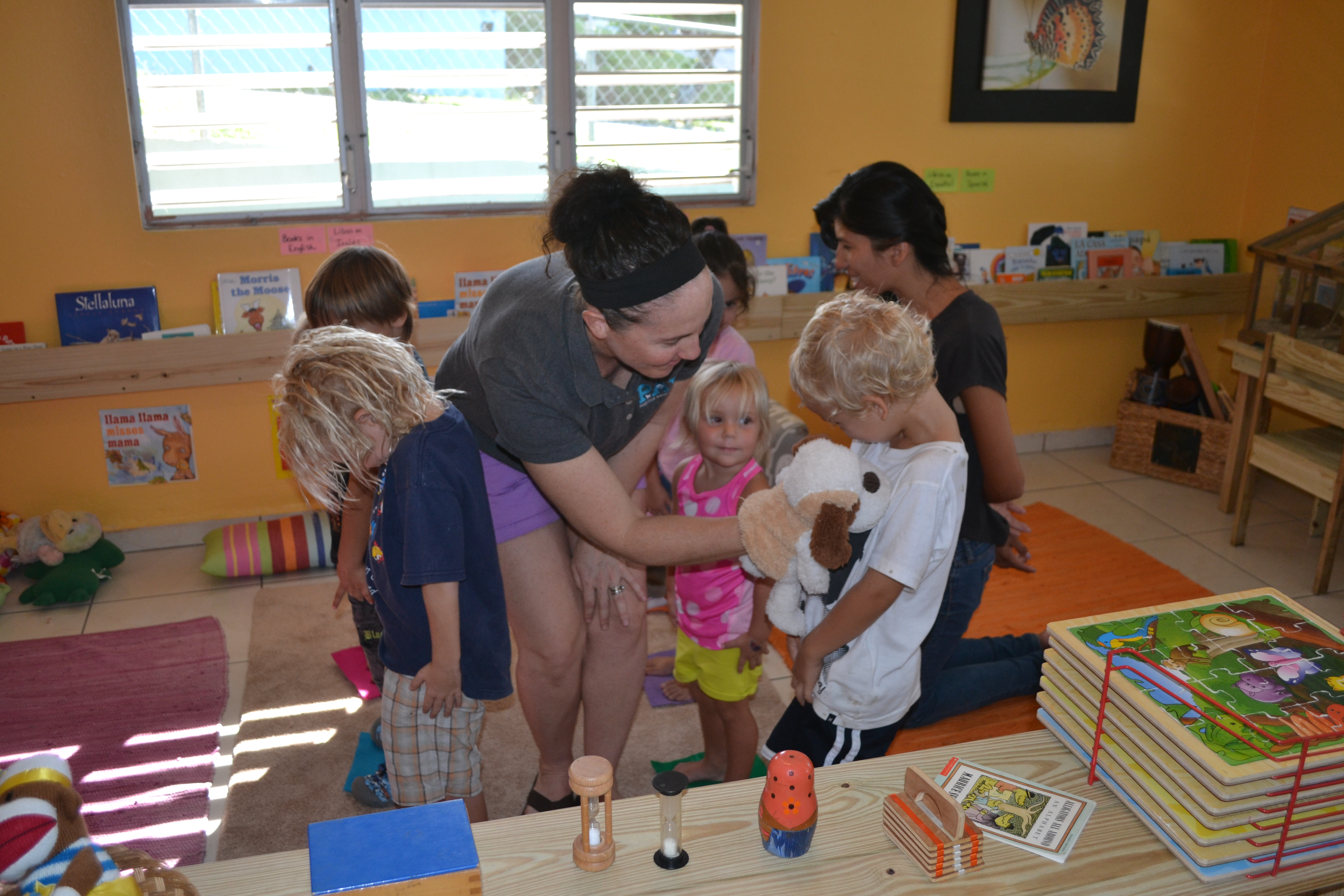
MamaMelsTerrie Hayward of PAW-Positive Animal Wellness  collaborating with Defensa de Animales Rincon (DAR), was welcomed at Mama Mel’s Childcare Services last Thursday for a presentation on dog safety.

The children learned to “Be A Tree” (Doggone Safe) as part of the fun & interactive presentation for children that teaches them how to read dog body language & be safe around dogs. They then practiced what they had learned (see photo) with a dog puppet.

Next, everyone learned a new interactive song via the Best Friends Animal Society about being safe with dogs out & about!

Contact PAW if you might like to discuss how to have a humane education program come to your school or group.

November 23, 2013

Other Types of Training? Confusion Explained

Terrie Hayward

Day TWO-21 Day Positive Training Kickstart Challenge

There are basically two types of training. One suppresses behavior as the learner attempts to do just the bare minimum to avoid something aversive (like punishment or corrections).

The other type is when the learner attempts to go to great lengths to try new & exciting things in order to earn reinforcers.

This video provides a good example of Positive Reinforcement Training vs. training using punishment.

There are four problems with punishment based training. One, aggression. Because punishers are not pleasant, there often can be aggression towards the punisher. Two, apathy. The animal becomes apathetic-lacking interest, emotion, concern, or feeling about learning. Three, escape/avoidance. Here, the learner attempts to escape or avoid the punishment & often the person meting out the punishment. Finally, generalized fear. In this case, the animal comes to fear things that they may associate with the situation or behavior or person during which the punishment occurs.

Examples of punishment based training techniques include choke chains, prong collars, shock collars, hitting, kicking, & any coercive or correction based methods.

All of these outcomes can be avoided by utilizing a positive reinforcement based training method. Examples include clicker training, rewards based teaching, or TAG (Teaching with Acoustical Guidance) teach.

November 22, 2013

Positive Reinforcement Training. Just What Does it Mean?

Terrie Hayward

four_on_floorDay ONE-21 Day Positive Training Kickstart Challenge

Wouldn’t it be nice to try to catch your dog or horse or child doing something right & rewarding them for that great behavior choice rather than waiting around for them do do something wrong & punishing them for it?

Positive reinforcement training or “R+ Training” is just that simple! We OBSERVE a behavior by watching for it or using a technique called, “shaping.” Then we mark the behavior with a sound or sometimes even a light, but with a signal that tells our learner that the behavior that they JUST performed is what we liked. Finally, we reinforce that behavior by allowing access to something that the learner finds reinforcing (food, a game, a walk, interaction, money..etc.).

ACTION: See if you can find someone around you (person or animal) doing something right today & reinforce that behavior (with a kind word, belly rub-best reserved for the pups!, or some other special treat)!

Remember for each new “like” of PAW-Positive Animal Wellness on Facebook during the 21 Day Challenge, PAW will donate $1.00 to Defensa Animales de Rincon (DAR)!

Don’t miss one day of the kickstart! Sign up for updates below.


Ready for better dog or puppy behavior?

Fetch the latest training intel–straight to your inbox!